On July 2, the Marine Education and Research Society (MERS) launched the Whale-Safe Boating course. This free, online, comprehensive resource fulfills a critical need by addressing the safety of BOTH marine mammals and boaters — whether operating motorized or unmotorized vessels.
The course is aimed at helping boaters stay safe, understand and follow the law, and contribute to marine conservation—while enhancing their enjoyment of British Columbia’s spectacular marine environment.
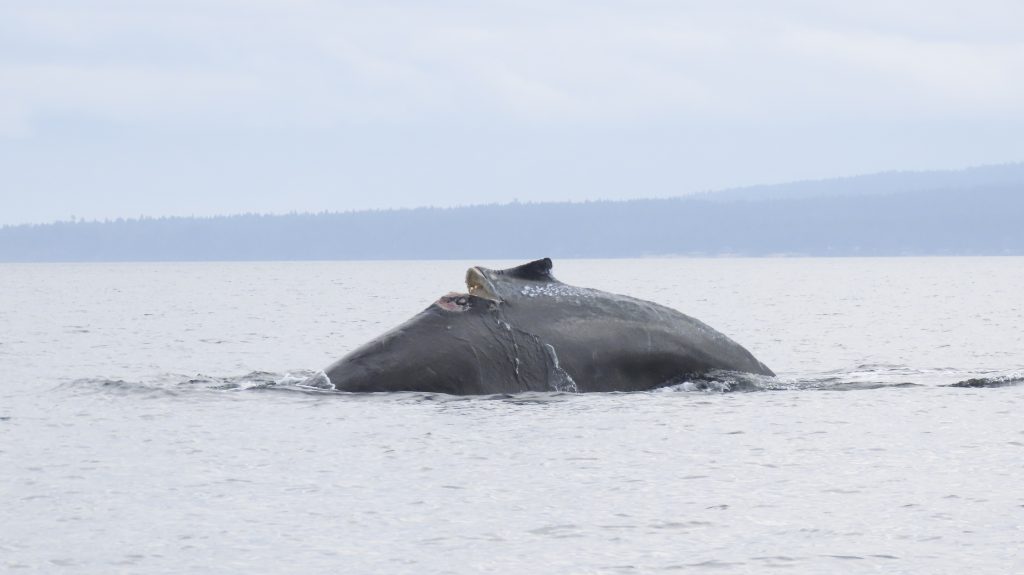
Our team has witnessed firsthand the urgent need for increased boater education. There have been serious human injuries and property losses due to collisions with whales, including incidents where a boater was paralyzed, kayaks were flipped, and motorized vessels were disabled. These incidents pose an equally serious threat to marine mammals.
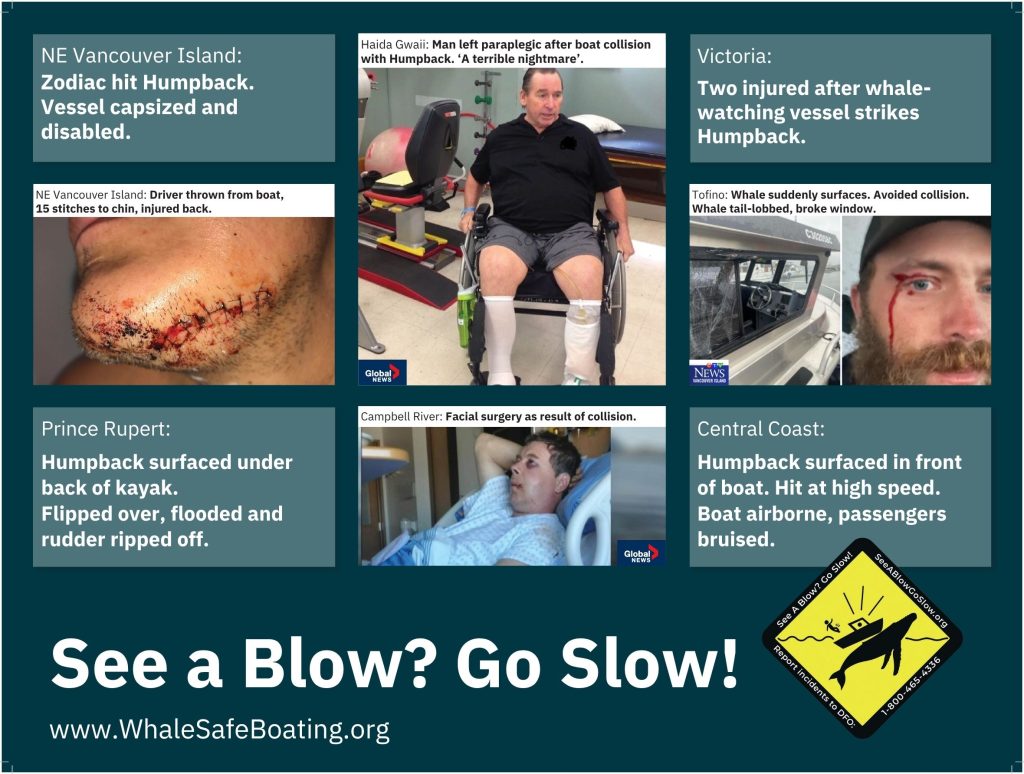
The Whale-Safe Boating course builds on our See a Blow? Go Slow! campaign, which we launched in 2014 in response to the increase of Humpback Whales off the BC coast. Lessons learned from that initiative, and results from a recent poll of ~4,000 recreational boaters, directly informed the course’s development.
That poll revealed that 53% of surveyed BC boaters were unable to correctly identify minimum approach distances from marine mammals in various scenarios. The most cited barrier to compliance was: “Difficulty remembering the laws for different species, vessel types and/or areas”.
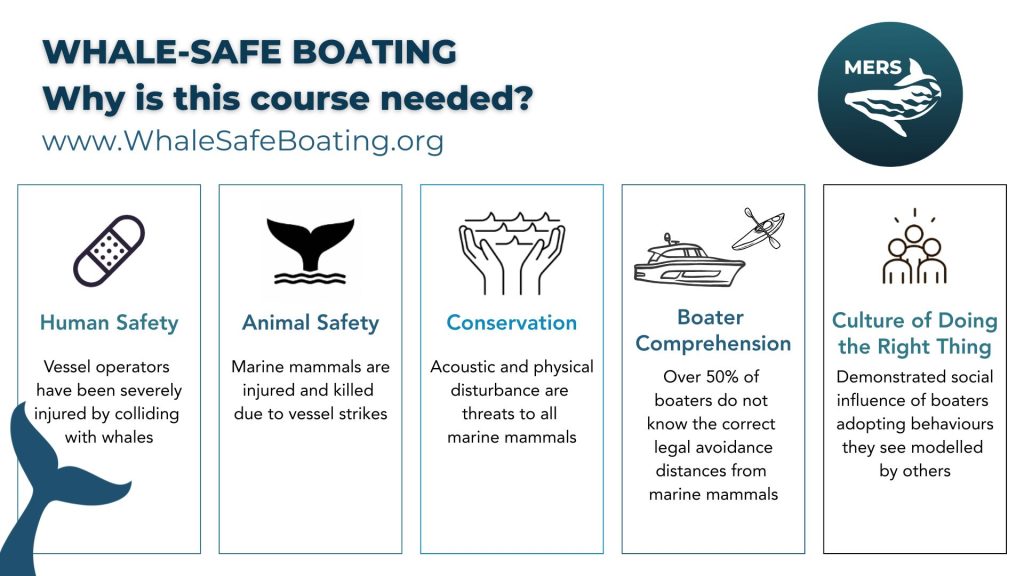
The Whale-Safe Boating course directly addresses such knowledge gaps. It provides information about marine mammal behaviour that aids understanding of the laws and best practices for safe and responsible boating.
The most effective way to increase safety, learning, and respect for marine wildlife, is to reach as many boaters as possible. There can be such significant gains when boaters share what they’ve learned, model best practices, and act as informed eyes on the water. We can all contribute to a culture of Whale-Safe Boating – for the wellbeing of people and our marine mammal neighbours.
Course Details:
- The dynamic, online course is 90 minutes long
- Narrated with the option of close captioning
- Can be paused, resumed, and referred back to at any time
- Certificate of completion
- Downloadable resources
- Optional supplemental module includes details about marine mammal species in coastal BC,
plus Basking Sharks and Leatherback Turtles
The Whale-Safe Boating course was made possible by Transport Canada’s Boater Safety Contribution Program and was developed with input from an advisory committee of experts in boating, paddling, education, marine mammals, and regulatory policy.
Advisory Committee members included representation from:
- Transport Canada
- Fisheries and Oceans Canada
- Parks Canada
- Sea Kayak Guides Alliance of British Columbia
- Cetus Research and Conservation
- Boating BC
- CanBoat / NautiSavoir
- Ocean Wise
- Georgia Strait Alliance
- Independent researchers with expertise in vessel/whale interactions